
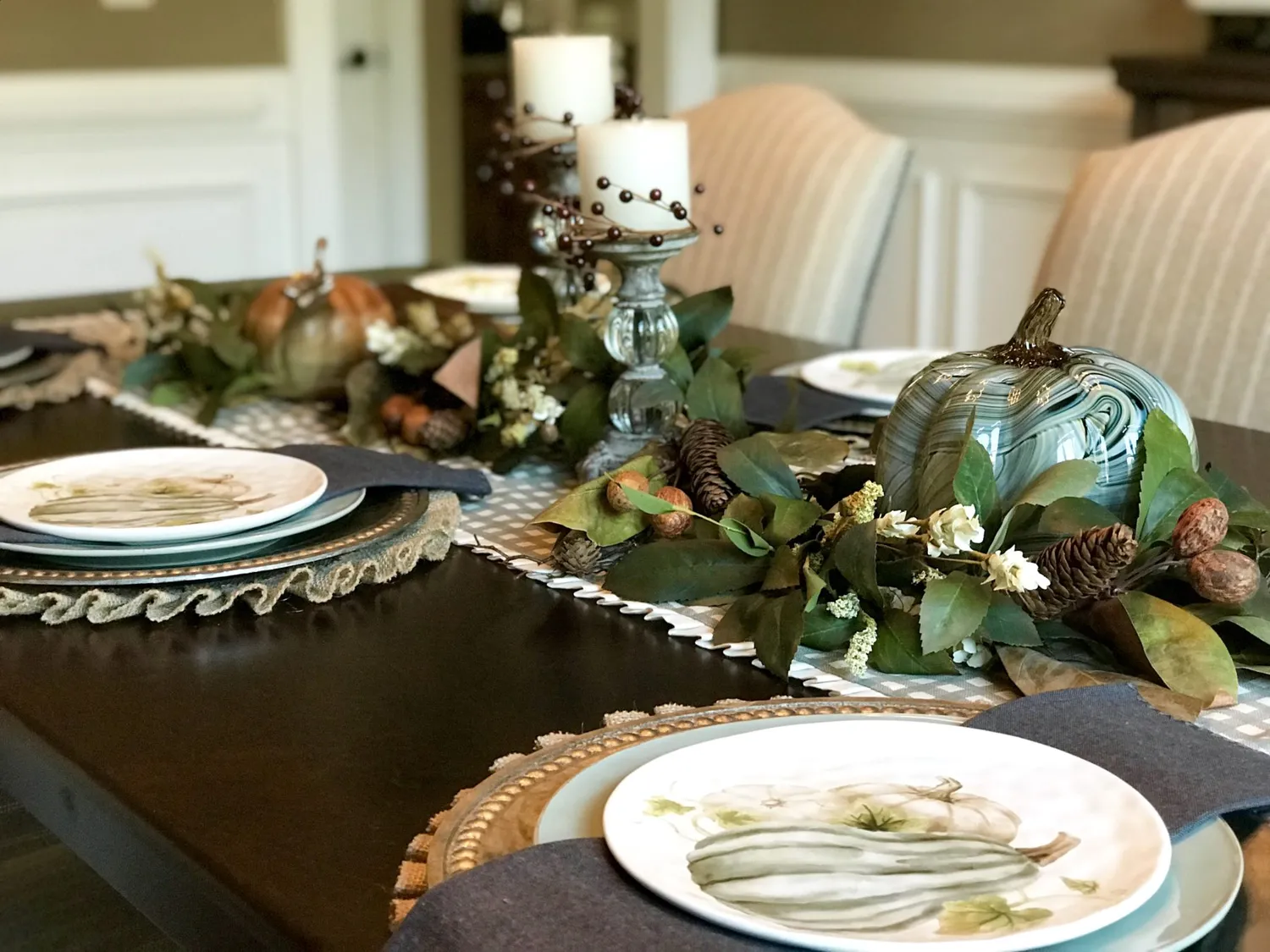
The beginning of fall is one of my favorite times of year to decorate. There is something about the shift in the air and the change of the light that makes me want to pull out all the warm textures, rich tones, and layered elements that make a home feel so cozy and inviting. And the dining room table is always the first place I start.
Start With One Inspiration Piece and Build From There
This is the single most important piece of advice I can give you about decorating any space, and it applies to table styling just as much as it does to a whole room. Do not start by shopping. Start by finding the one piece that makes your heart sing, and then let everything else answer to it.
For my fall table, that inspiration piece was a set of autumn botanical salad plates. The watercolor pumpkin and gourd illustrations on them were soft and sophisticated, not the bright orange and red you typically see in fall decor. They had a muted, earthy quality that felt more like a fine art print than a seasonal decoration. The moment I saw them, I knew exactly what direction the table needed to go.
How to Layer a Place Setting Like a Designer
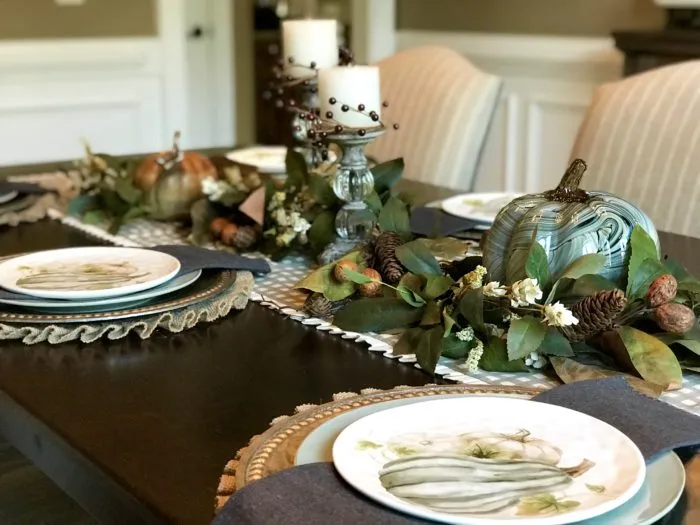
The place setting is where the magic of a beautifully styled table comes to life. Most people set a plate and call it done. But a layered place setting adds depth, warmth, and visual richness, instantly elevating the entire table. Here is the layering approach I used, along with why each element earns its place.
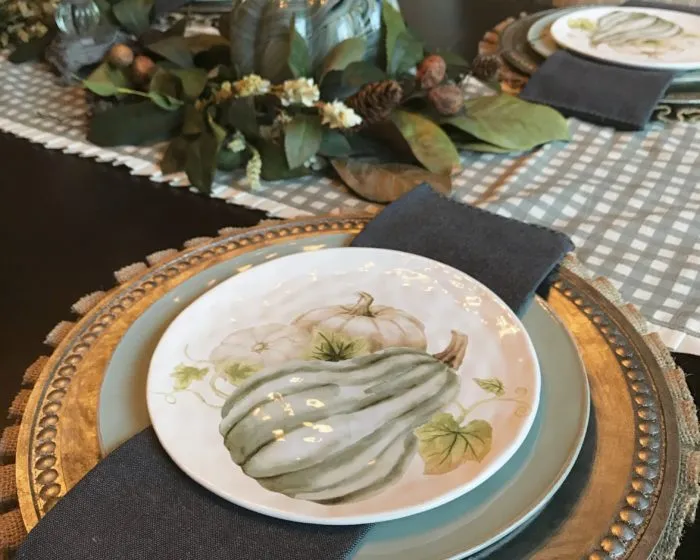
- The charger: This is your foundation layer. A charger with texture and warmth sets the tone before anyone even looks at the plates. Mine had a beaded edge that added just enough detail without competing with anything above it. If your charger is boring, your place setting will be too, no matter how beautiful the plates are.
- The dinner plate: This is where your color story starts. I chose a soft, muted blue-green plate as my base, which pulled directly from the tones in the salad plates above it. Layering two plates of different sizes and tones adds depth and makes the place setting feel considered rather than assembled.
- The salad plate: This is your statement piece and your inspiration anchor. Let it sit front and center. Do not hide it under anything. The botanical pumpkin illustration on mine was the entire reason this table came together the way it did.
- The napkin: I used a deep denim-blue napkin tucked under the plate rather than folded on top. This kept the salad plate as the visual star while still adding a rich, moody tone to the place setting. Cloth napkins make an enormous difference. Even simple ones in the right color communicate care and intention in a way that paper never can.
- The placemat: A burlap placemat with a ruffled edge added another layer of natural texture beneath the charger. Texture is what gives a table warmth. Without it, even a beautifully set table can feel flat and cold.
Choose a Table Runner That Works for the Whole Season
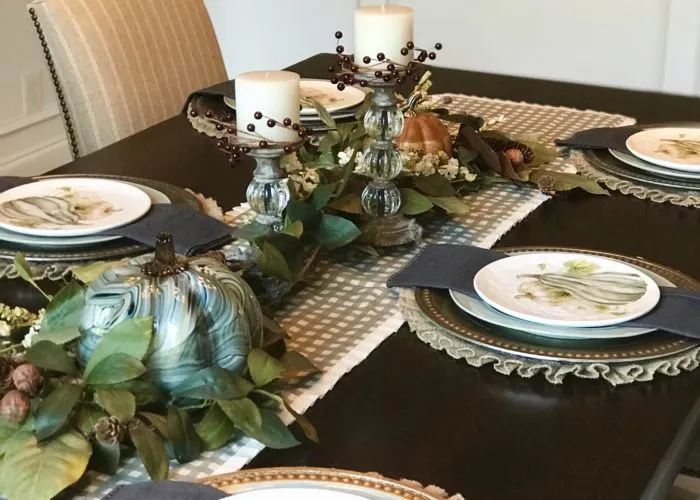
The table runner is one of those pieces that quietly ties the entire table together. It connects the centerpiece to the place settings, grounds the whole composition, and adds another layer of pattern or texture to the mix. Choosing the right one matters more than most people realize.
I used a gray-and-ivory gingham-check runner for my fall table, and I want to explain why that choice was intentional rather than accidental. A classic gingham check is not specifically a fall pattern. It is a timeless, neutral pattern that works across seasons. That matters a great deal when you are thinking about getting the most out of your decor investment.
Build a Centerpiece With Layers, Height, and Organic Texture
The centerpiece is where you have the most creative freedom, and it is also where most people either over-complicate things or under-deliver. A beautiful fall centerpiece does not have to be expensive or elaborate. It needs organic texture, some variation in height, and a connection to the color story you have already established in your place settings.
I started my centerpiece with a green laurel leaf garland as the base. Running along the center of the table, it created a lush, organic foundation that gave everything else something to nest into. I then wired in magnolia leaves, which added a larger, more sculptural leaf shape, and wove in cream wildflowers for softness and contrast against all the deep greens.
The pumpkins were the finishing touch, and they deserve separate mention for how much they contributed to the overall feel of the table.
Why I Chose Blue-Green Pumpkins Instead of Orange
This is the decision that surprised people most when they saw this table, and it is also the decision I am most proud of. Traditional fall decor almost automatically defaults to orange pumpkins. And orange pumpkins are beautiful. But for this particular table, with these particular plates and this color story, orange would have completely disrupted everything I had built.
This is the power of starting with an inspirational piece. When you know what you are anchoring to, unexpected choices like blue-green pumpkins become obvious rather than risky. You are not guessing. You are following the logic of the color story you have already established.
The Principles Worth Remembering
Whether you are styling a fall table, a Christmas table, or just your everyday dining room, these are the ideas that will serve you well every single time:
- Find your inspiration piece first. Let one beautiful thing guide every other decision.
- Layer your place settings. Charger, plate, salad plate, napkin. Each layer adds depth and intention.
- Buy versatile foundational pieces. Runners, chargers, and placemats that work across seasons give you far more value per dollar.
- Use organic texture in your centerpiece. Real or quality faux greenery instantly grounds a centerpiece in warmth and naturalness.
- Do not default to the expected color. Blue-green pumpkins looked far more beautiful on this table than orange ones would have. Trust your color story over convention.
- Think one season ahead. When you shop for fall, think about what will carry forward into other seasons. That kind of forward thinking makes decorating easier, more cohesive, and far more budget-friendly.
Make It Yours
The best part of table styling is that it is one of the most accessible forms of decorating. You do not need a contractor, a renovation, or a big budget. You need a little intention, a willingness to look at your space with fresh eyes, and one piece that inspires you enough to build around.
That is really what decorating has always been about for me. Not following a trend or replicating something I saw in a magazine. Finding the things that feel like me, arranging them with care, and creating a home that feels warm, beautiful, and completely ours.
And if you found this helpful, save it for later and share it with a friend who loves to decorate for fall. These ideas work every year, and the best tables are always the ones that feel most like you.
With love,
Holly
Simple Things Made Beautiful